

What Is a RIB Boat?
A RIB combines a rigid hull with an inflatable collar to create a fast, stable and practical marine platform.
The strength of a professional RIB is not one component alone. Hull geometry, tube construction, deck layout and weight distribution must work together for predictable behaviour in real operating conditions.
RIB means Rigid Inflatable Boat
The term describes a boat built around two structural systems: a rigid hull and an inflatable tube or collar.
Rigid hull
The hull carries loads, defines the running attitude and determines how the boat enters, supports and exits waves.
Inflatable collar
The tube system adds buoyancy, stability, perimeter protection and practical safety during boarding or alongside work.
Operational deck
Consoles, seating, fuel, batteries, lifting points and equipment must be positioned so the boat remains balanced.
How a professional RIB is constructed
A professional RIB is built around the relationship between hull geometry, deck layout, tube construction and weight distribution.
Each part affects how the boat behaves under load, at speed and during low-speed operations such as boarding, rescue, diving support, harbour work or marina handling.
Hull geometry
Controls impact, lift, efficiency and steering authority in changing sea states.
Tube system
Supports stability, buoyancy, impact protection and alongside handling.
Deck layout
Determines how people, equipment and controls are positioned for real use.
Weight balance
Influences trim, running attitude and predictable handling under payload.
The two systems that define RIB behaviour
The rigid hull
The hull most directly affects offshore behaviour. A good hull manages impact loads, releases water cleanly, maintains steering authority and remains predictable as payload changes.
The inflatable collar
The collar provides buoyancy around the perimeter, improves stability when people move around the deck and protects the boat during contact with docks, pontoons or other vessels.
The working platform
A professional RIB is judged by repeatable behaviour: how it runs loaded, how it handles daily use and how easily it supports its intended role.
Why RIB boats are used operationally
RIBs are valued because they combine speed, stability, load capacity and close-quarters practicality.
Rescue and SAR
Stable alongside people in the water, quick to deploy and capable in rough coastal conditions.
Patrol and security
Fast response, predictable handling and controlled contact with other craft.
Diving support
Open deck space, tube stability and payload flexibility for divers, tools and equipment.
Commercial operations
Passenger transport, survey work, harbour duties, crew transfer and offshore support.
A RIB should be treated as a working marine platform
Tornado Boats approaches RIB design through hull behaviour, tube durability, efficient construction and layouts that make sense for real operators.
Rather than treating the RIB as a lifestyle object, the engineering emphasis is on carrying people, equipment and fuel safely while remaining predictable in changing sea states.
Is a RIB the same as an inflatable boat?
No. A RIB has a rigid structural hull combined with inflatable tubes. A fully inflatable boat does not have the same rigid running surface.
Why do RIBs have inflatable tubes?
Tubes provide buoyancy, stability and impact protection. They also help during boarding, recovery work and close contact with other vessels.
Are RIB boats good offshore?
A properly designed RIB can be effective offshore, but hull design, size, load, engine setup and operating conditions all matter.
What tube material is best?
The best material depends on use case, budget and service life. For demanding use, tube material and seam construction are important engineering decisions.
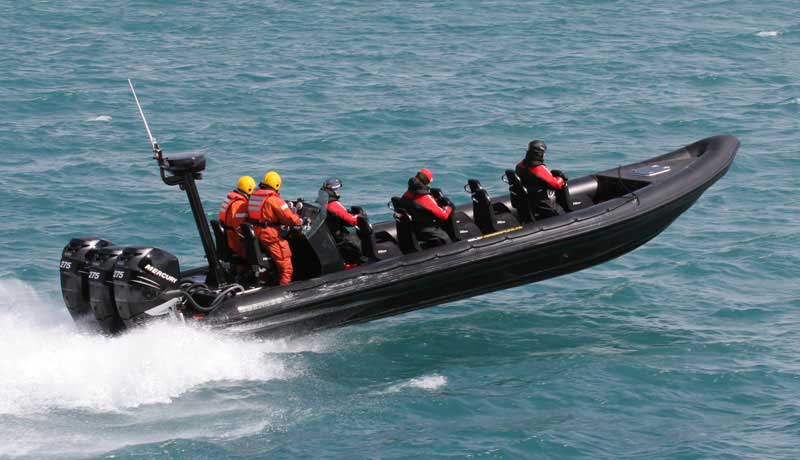
Built to work offshore.
Need a professional RIB for commercial, operational or demanding recreational use? Contact Tornado about the right configuration for real work at sea.